
No Kid Hungry's Center for Best Practices employs consultants to help expand our in-house knowledge of child nutrition programs. Consultants work closely with No Kid Hungry staff on webinars, conferences, and written resources. Highlighting the expertise and passion of our staff and consultants is important to No Kid Hungry, so check out the Center for Best Practices’ blog to see more features like this one.
Introducing Jada Curd
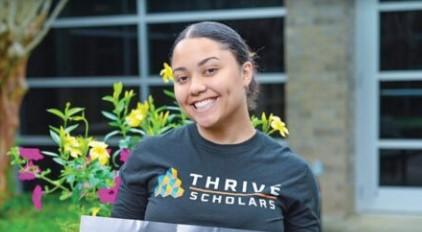
Jada Curd is a junior at Mt. Holyoke College, double-majoring in economics and politics with a minor in data science. She also serves as a consultant and advocate for No Kid Hungry. Originally from Burke County, Georgia, Jada was raised by her father and grandmother and grew up alongside her younger brother, sister, and three step-siblings. Having participated in school meal programs throughout her life, she also gained firsthand experience working as a student worker in the Board of Education Public Information Office of Burke County. During that time in Burke County, she worked alongside the school meal program located in the next office over, and it was there she first met her food service director, Donna Martin, a fellow NKH consultant.
When I ask you about school meals, what is your first impression? Did you have a favorite meal or memory associated with your school meals?
"My first impression of school meals and what I often say about school meals is how important they are. School meals play a role not only in having a healthy school but in having a healthy community overall."
One of Jada's favorite school meal memories is cheesy grits. "I'm from the south, so our school had meals aligned with what the students eat. On the days that we had cheese grits, the school made the cheese grits overnight from stone-ground grits. Breakfast was usually in the classroom except on cheese grits day when they needed to keep the grits warm. On those special mornings, kids would chase the cheese grit carts down the hallways because everyone loved the cheese grits. "I share this story because it's almost a perfect example of how school meals not only feed the people, but also make good memories."
Burke County, Georgia, participated in the Community Eligibility Provision, CEP. CEP is a school meal funding option of the National School Lunch Act that enables schools to provide free breakfast and lunch to all students. Due to this, growing up, Jada believed that all schools had free school lunch. Once she became a champion for school meals, she discovered that not all children had access to the free school meals she loved, and she wanted to make a difference. This drives the work she now does with No Kid Hungry.
"I knew so many kids that needed, like needed, needed school meals and knowing that there are so many kids across the country not getting them when it was just my norm really frustrates and upsets me. So I am passionate about making sure lawmakers and agencies and companies know that school meals are important."
What do you wish school meal and summer meal providers knew about the youth perspective on their programs?
"Overall, just how easy youth perspective is to get and how important it is for their programs. When I am at conferences, I have a lot of school nutrition directors come up to me to ask how to engage students, and I answer ‘just ask them.’ People often forget that students want to be involved in this process."
Jada encourages school nutrition professionals not to go in with the understanding that students don't like school meals and don't like to engage with the school. Students are ready and willing to share their feedback. You can start small by simply asking the students you pass in the cafeteria, "How do you like today's meal?".
Another misconception Jada has seen is that school staff may worry about how to implement changes students want to see. They might worry that they must completely change their meal program to meet student demands.
Jada suggests that students want to be heard, and if you cannot meet their expectations, just be honest. Tell the students about federal restrictions, with wording they can understand, and how you can meet their recommendations while meeting school meal requirements.
Why do you think student voices are essential in child nutrition programming?
"It's for them." Jada sees how engaging students in the school meal program can lead to higher participation. When students feel like their voices are heard and that the menu reflects their interests, they will chase the cheesy grits carts down the hallway.
"Engaging students can lead to higher morale in school in general. If you know that the adults in the school are constantly asking for your feedback on things, it makes you have an overall better relationship with all of the adults in your school. It encourages open communication throughout all different venues and departments, which is super important for students to do well in school. It makes students more comfortable navigating their school system overall because a lot of students need to know how to advocate for themselves. If they know that their school is listening to them and actually responds to them, then they know they have people they can trust and create a community of help."
Students need to be shown how their advocacy can positively impact their school, and school meals are a great place to start that advocacy. As students grow in confidence, they can begin advocating at a higher level, like Jada does for No Kid Hungry.
"The people who are making the decisions often don't know people who need school meals." Jada wants to make sure her voice and the voices of other students are heard when it comes to policy and programmatic decisions around school meals, as it impacts students the most.
How would you recommend that other students get involved in fighting childhood hunger?
“Once you see the problem, you want to help.”
Contact your school nutrition director and see how you can help. Sign up to volunteer at a summer meal site or the school nutrition program. Students don't usually see the inner workings of their school meal program; when they do, they have a new appreciation for the program.
What’s next for you? What are you most excited about this next year?
Jada recently started her first full year at Mt. Holyoke College and is settling into her new routine.
"During the school year, I will work with first-generation students to connect them with the school's resources. I will continue to work as a consultant for No Kid Hungry. I will also be looking for internships for next year. I am applying to everything I can, focusing on business or non-profit consulting internships."
We at the No Kid Hungry campaign appreciate Jada and all of the efforts she is taking to raise awareness to the issue of childhood hunger. She’s using her platform to inform and educate the corporate and non-profit community, school nutrition staff, state agencies and USDA about the importance of school meals and summer meals, the youth perspective, and incorporating lived experience into decisions affecting students, since as she said, “it’s for them.”
Check out some of the resources Jada has contributed to as a No Kid Hungry consultant.